
Gene Transfer
Ultrasound Mediated DNA Transfer
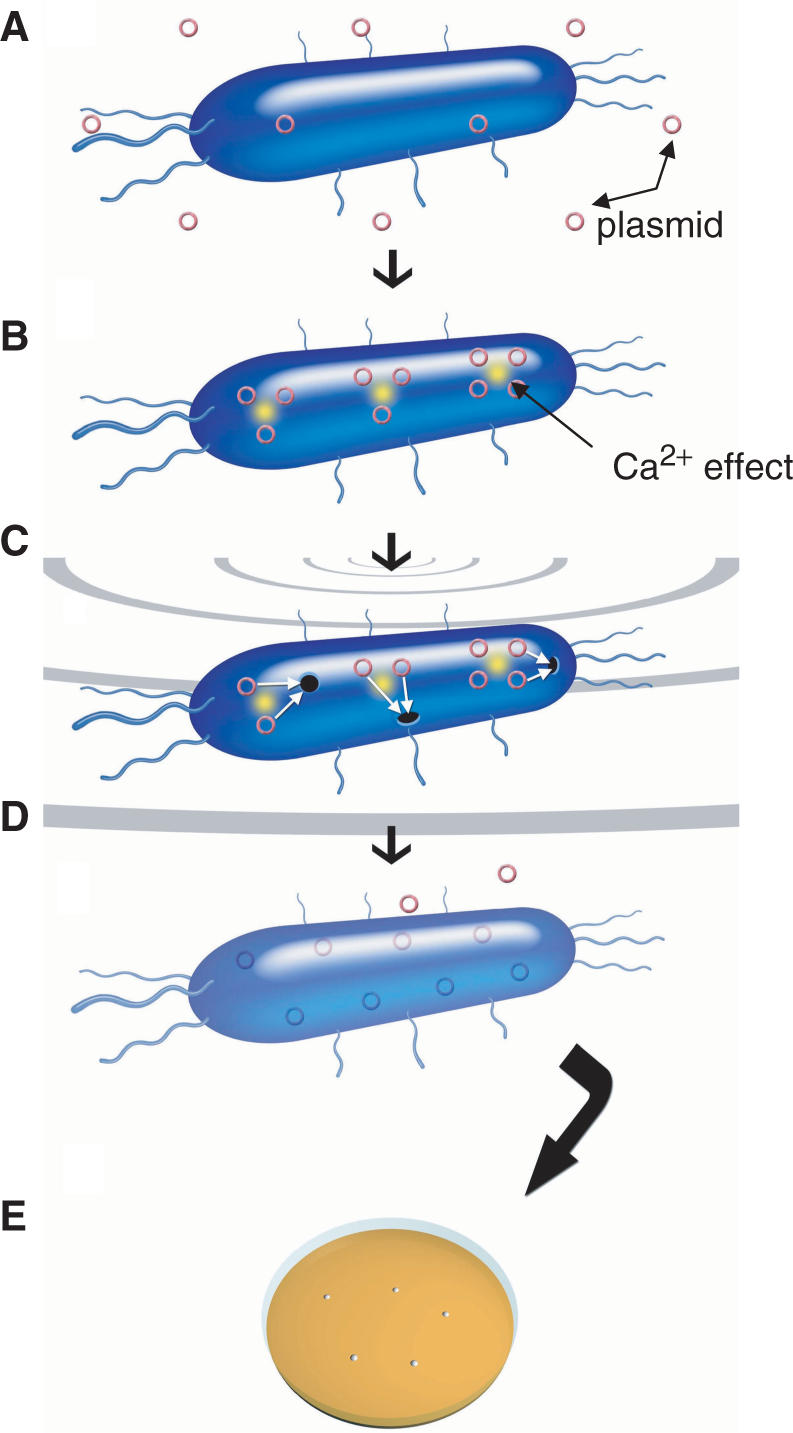
Ultrasound-mediated DNA delivery investigates a physical route for introducing plasmids into bacteria. The 2007 Nucleic Acids Research study below evaluates low-frequency ultrasound as an alternative to established bacterial transformation methods.
Research question
Can ultrasound assist bacterial DNA transfer under conditions that differ from the low-ionic-strength medium and high voltage used for electroporation?
Approach and findings
The researchers used a 40 kHz ultrasound bath to transfer a plasmid into Pseudomonas putida, Escherichia coli and Pseudomonas fluorescens. They investigated how exposure time, calcium chloride and other experimental conditions affected delivery.
Interpretation and next steps
The results demonstrate bacterial transformation in the tested experimental systems. Applications to natural microbial communities and environmental engineering require their own assessment; the study should not be read as proof of unrestricted delivery across organisms or environments.
Representative publication
2007 · Nucleic Acids Research
Ultrasound-mediated DNA transfer for bacteria.Demonstrates low-frequency ultrasound as a method for plasmid delivery into bacterial cells.